
Banaroma - Case study
Building a Contemporary Artisanal Mithai Brand Around Banaras
PROJECT SNAPSHOT
VARANASI | ARTISANAL MITHAI | BANARASI CHAAT | PRODUCT DEVELOPMENT | SOPs & SYSTEMS
ARTISANAL MITHAI
Contemporary interpretations of Indian classics
BANARASI CHAAT
Authentic recipes developed for a structured retail format
LIVE PREPARATION
A live chaat preparation counter in Varanasi
SCALABLE
Products, workflows and SOPs designed for consistency
The challenge
Banaras had the food. The challenge was building the system.
Banaroma began with an ambitious proposition:
Create an artisanal mithai brand rooted in the culinary identity of Banaras, while bringing authentic Banarasi chaat into a contemporary retail environment.
The opportunity was clear.
The challenge was making the proposition work as a business.
Traditional mithai and chaat are deeply dependent on craftsmanship, freshness and individual preparation.
Banaroma needed to retain those qualities while introducing something equally important:
Consistency.
The products had to be reproducible.
The presentation had to be standardised.
The team had to be trainable.
And the overall proposition had to be capable of scaling beyond individual chefs.
THE BRIEF
Create an artisanal mithai concept with a distinctive contemporary product language.
Develop authentic Banarasi chaat in a scalable format.
Build recipes, workflows and SOPs that could deliver consistent products.
And create a retail proposition that could work across everyday consumption, gifting and corporate orders.
The Project X approach
We didn’t treat Banaroma as a menu-development exercise.
Project X approached Banaroma as a combination of:
PRODUCT + CULTURE + PROCESS + EXPERIENCE + SCALABILITY
The starting point was the culinary identity of Banaras.
From there, we developed the product philosophy, curated the mithai portfolio, worked on Banarasi recipes, developed the live preparation format and created the operating standards required to reproduce the products consistently.
The objective was simple:
Preserve what makes the food distinctive. Build the systems required to make it scalable.
THE IDEA
Contemporary mithai. Authentic Banaras.
Banaroma needed to feel rooted in Banaras without becoming a conventional mithai shop.
We therefore developed a product philosophy based on reinterpretation rather than reinvention.
Traditional formats remained recognisable.
But flavour, texture, sweetness, presentation and finishing were deliberately reconsidered.
The result was a product language that could feel contemporary while remaining unmistakably Indian.
THE PRODUCT PHILOSOPHY
Less sweetness. More flavour.
We deliberately worked towards products that were approximately 20–30% less sweet than conventional market benchmarks.
The intention was to allow the core ingredients and flavour combinations to come through rather than relying on sweetness as the dominant sensation.
Familiar formats. Unexpected combinations.
Classic Indian mithai became the starting point for new flavour combinations.
Pistachio.
Chocolate.
Rose.
Fig.
Saffron.
Brown butter.
Walnut.
The objective wasn’t novelty for its own sake.
It was to create products that were familiar enough to understand, but distinctive enough to remember.
Texture became part of the product identity.
Soft.
Creamy.
Chewy.
Crisp.
Layered.
Each product was developed with a defined texture goal rather than treating texture as an incidental result of the recipe.
And finishing had to remain restrained.
Garnish was treated as part of the product standard.
Not decoration.
We built the menu around product depth, not menu size.
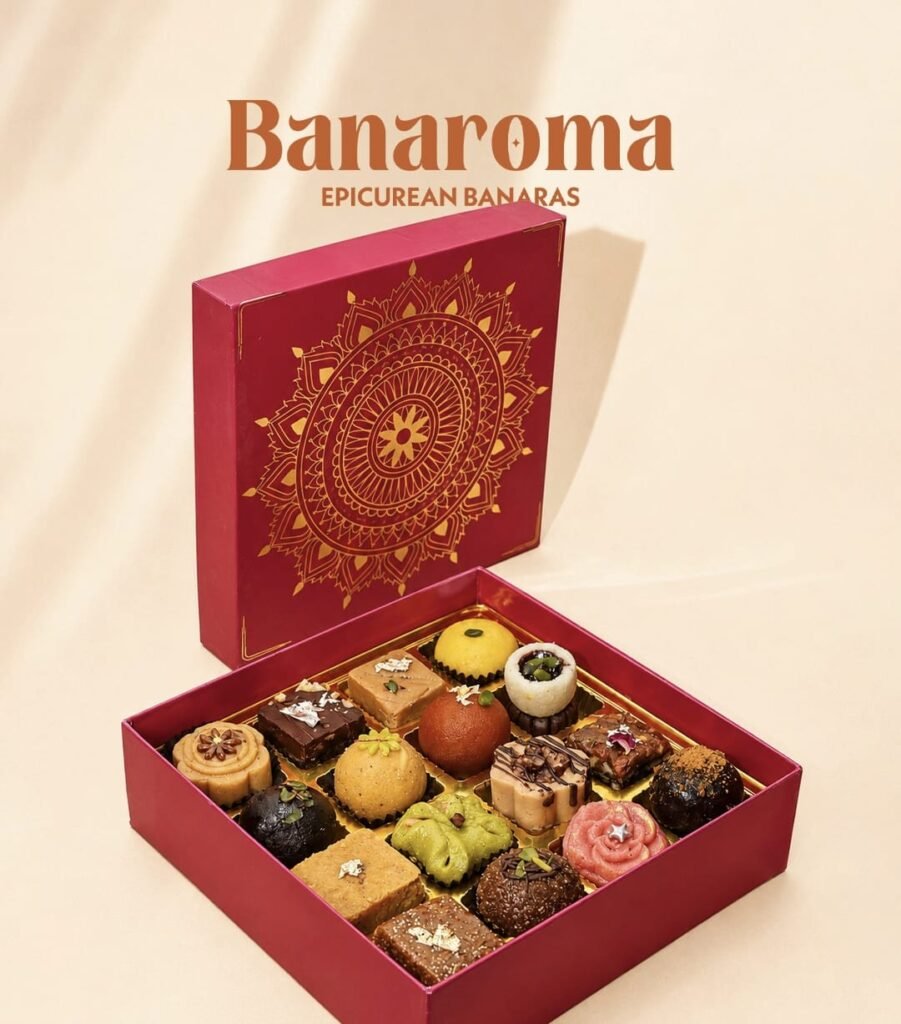
Project X developed a curated portfolio of mithai across several product families.
The objective was to create enough range to establish a strong brand identity without creating unnecessary operational complexity.
SIGNATURE MITHAI
Aurum Pista Jamun
A soft, rich jamun built around a pistachio core and refined finishing.
Rabri Reserve Jamun
Jamun with a rich rabri centre, designed around contrast between the exterior and filling.
Midnight Cocoa Jamun
A darker cocoa-led interpretation with a chocolate centre.
Noor Rose Peda
A delicate peda with controlled rose notes and a refined finish.
Anjeer Khoya Peda
A more textured peda combining fig and khoya.
Brown Butter Walnut Peda
A richer interpretation built around brown butter and walnut.
DRY FRUIT ATELIER
Premium formats built around nuts, fruit and texture.
The dry fruit collection included:
Noor Kaju Katli
Salted Caramel Katli
Royal Dry Fruit Barfi
Anjeer Luxe Barfi
Pista Marzipan Block
The collection was designed to work particularly well for premium retail and gifting.
CHENNA COLLECTION
Soft, delicate products built around classic Indian milk-based formats.
The collection included:
Kesar Ivory Rasgulla
Pista Ivory Rasgulla
Gur Ivory Ras
Almond Praline Rasmalai
Rose Velvet Rasmalai
The approach combined familiar formats with controlled flavour and texture interventions.
BESAN & CLASSICS
Traditional formats, brought into the Banaroma product language.
Classic besan-based products were developed alongside more contemporary flavour combinations.
The objective was to ensure that the menu retained enough familiarity for customers looking for traditional Indian mithai while still establishing a distinctive brand identity.
SIGNATURE / FUSION
Where traditional mithai became a new product format.
The final collection allowed the team to explore more contemporary expressions of Indian desserts.
Jamun Stack
Rasmalai Cheesecake Cube
Katli Mille-Feuille
Jamun Noir Bonbons
These products extended the brand beyond conventional mithai formats.
But the underlying principle remained the same:
Indian at the core. Contemporary in execution.
BRINGING BANARAS TO THE CHAAT COUNTER
Authentic Banarasi chaat. Built for a professional retail environment.
The second part of the project was fundamentally different.
Banaroma also needed to serve authentic Banarasi chaat.
Project X worked with recipes and food references from Banaras and translated them into a controlled retail format.
The challenge was to preserve the character of the food while introducing:
Consistency.
Portion control.
Preparation standards.
Speed of service.
Repeatability.
The objective was not to make Banarasi chaat feel industrial.
It was to make the operating system behind it more professional.
MAKING PREPARATION PART OF THE EXPERIENCE
The chaat counter became part of the proposition.
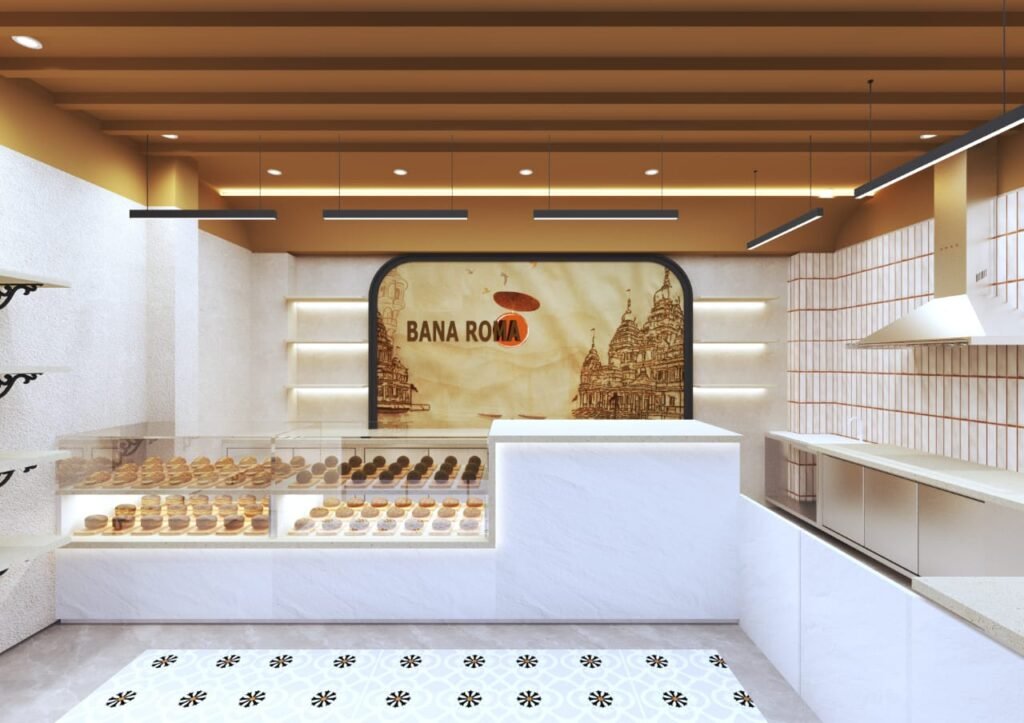
A live preparation counter was created in Varanasi.
The customer could see the preparation rather than simply receiving a finished product.
This created a stronger connection between:
Freshness + Craftsmanship + Experience
At the same time, the preparation process was structured around defined recipes and operating standards.
The objective was to make the visible craft repeatable.
DESIGNING FOR MULTIPLE OCCASIONS
One product system. Multiple consumption occasions.
Banaroma was not designed only around the individual retail purchase.
The product architecture was developed to work across different occasions.
PER PIECE
Individual pieces allowed customers to select and experience the products directly from the retail counter.
BOX OF 8
A curated format designed for smaller gifting occasions and personal consumption.
BOX OF 16
A larger gifting format designed for celebrations, premium gifting and corporate orders.
This allowed the same product portfolio to serve multiple purchasing occasions without creating a separate product system for each.
FROM RECIPES TO SOPs
A good recipe is only the beginning.
For Banaroma, Project X developed detailed product and finishing standards covering both the Mithai Chef and Pastry Chef workflows.
Each product was broken down into:
Preparation
Core / Filling
Texture
Garnish
Finishing
Freshness
Display
Consistency
The objective was to define not just what the team had to make, but what the finished product had to look like, feel like and perform like.
DEFINING THE PRODUCT STANDARD
Every product needed a standard.
SWEETNESS
20–30% less sweet than conventional market benchmarks.
GARNISH
Minimal and purposeful. Never overloaded.
TEXTURE
Every SKU had a defined texture objective.
FRESHNESS
A defined freshness window to protect peak quality.
DISPLAY
High spacing, controlled quantity and premium presentation.
CONSISTENCY
Size, shape, colour and visual uniformity were treated as operating standards.
The result was a product guide that functioned as more than a recipe book.
It became a production, finishing and quality-control system.
THE OPERATING PRINCIPLE
Authenticity could not depend entirely on the chef.
This was one of the most important considerations in the project.
Traditional food businesses often depend heavily on individual craftsmanship.
That works until the business needs to:
Train new people.
Open another location.
Increase production.
Maintain consistency.
Reduce dependence on individual employees.
Project X therefore worked to translate culinary knowledge into documented systems.
The aim was not to remove craftsmanship.
It was to make craftsmanship teachable and repeatable.
THE RESULT
A contemporary Banarasi food proposition built around product and systems.
Banaroma was developed as a contemporary artisanal mithai and Banarasi food proposition that brought together:
Artisanal Mithai
Authentic Banarasi Chaat
Live Preparation
Premium Retail
Gifting
Product Standards
SOP-led Operations
The result was a proposition designed to operate across both the emotional side of food — culture, craft and familiarity — and the commercial requirements of a scalable food business.
WHAT PROJECT X ACTUALLY CHANGED
CONCEPT
Translated the idea of an artisanal Banarasi mithai brand into a defined contemporary product proposition.
PRODUCT
Developed the mithai portfolio, flavour combinations, textures, fillings and finishing standards.
MENU
Created the menu architecture across Signature Mithai, Dry Fruit Atelier, Chenna, Besan & Classics and Signature/Fusion.
CHAAT
Worked on Banarasi chaat recipes and translated them into a structured retail preparation format.
EXPERIENCE
Developed a live preparation counter that made craftsmanship visible to the customer.
GIFTING
Created Box of 8 and Box of 16 formats for personal, celebration and corporate gifting.
SOPs
Created detailed production, finishing, garnish, freshness, display and consistency standards.
SCALABILITY
Built systems designed to reduce dependence on individual craftsmanship and make the products more reproducible.
THE OUTCOME
From an idea about Banaras to a structured food proposition.
Banaroma demonstrates what happens when cultural food knowledge is combined with structured product development and operational thinking.
The objective was never simply to create premium mithai.
It was to build a proposition where:
The product had a reason to exist.
The food retained its cultural connection.
The customer experience reinforced the product.
And the operating system supported consistency.
PROJECT X TAKEAWAY
Authenticity is only valuable when you can deliver it consistently.
The challenge isn’t preserving tradition.
The challenge is building a business around it.
Banaroma required us to work at the intersection of culinary tradition, contemporary product development and commercial operations.
The lesson is straightforward:
You don’t scale a recipe. You scale the system around the recipe.
That means product standards, preparation, people, training, presentation and consistency all have to work together.
PROJECT X’S ROLE
Project X Restaurants was engaged across:
- Concept Development
- Product Philosophy
- Menu Architecture
- Mithai Product Development
- Recipe Development
- Banarasi Chaat Development
- Food Trials
- Flavour & Texture Development
- Gifting Formats
- Live Counter Format
- Product Presentation
- Garnish Standards
- Chef Workflows
- Production SOPs
- Quality Standards
- Freshness & Display Guidelines
- Operational Standardisation
RELATED PROJECT X SERVICES
Concept Development
Building differentiated food concepts around a clear commercial proposition.
Menu & Product Development
Creating products and menus designed around customer demand, brand identity and operational reality.
Restaurant Operations Consulting
Designing systems, workflows and operating standards that work in the real world.
F&B Concept Development
Translating an idea into a commercially viable food business.
SOP & Training Systems
Turning culinary and operational knowledge into repeatable systems that teams can execute consistently.
PROJECT X RESTAURANTS
Certainty. Credibility. Knowledge Arbitrage. Execution Capacity.
We help restaurant owners, investors and hospitality businesses build, restructure and scale commercially viable food businesses.
BUILDING AN F&B CONCEPT?
Let’s talk about the business behind the idea.