
D!PR - From an underperforming burger outlet to a highly shareable QSR built around product, process and precision
PROJECT SNAPSHOT
Noida | 270 Sq Ft | 30-Day Transformation
₹10,000+
Monthly revenue per sq ft
30 DAYS
Concept to transformation
0
Paid advertising spend
OFFLINE-FIRST
No Zomato. No Swiggy.
The challenge
The space had already failed.
D!PR began with a difficult starting point.
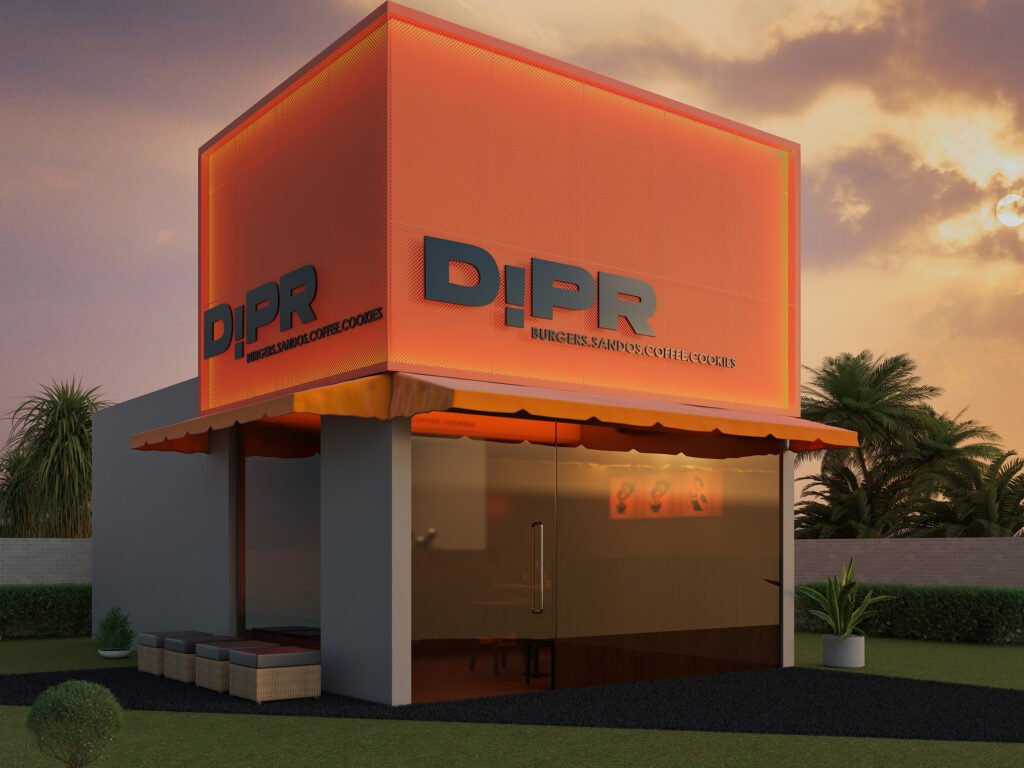
The 270 sq ft space in Noida had already been leased and re-leased multiple times over approximately two years. Previous food concepts had failed to establish themselves, and the outlet was underperforming.
The founders came in with an idea for a burger concept built around India’s messiest burgers.
But an idea alone wasn’t enough.
The challenge was to turn that idea into a commercially viable food business — within one of the smallest footprints possible.
The brief
Create a burger concept people would actively seek out.
Make the food exceptional.
Build an operation that could deliver it consistently.
And make 270 sq ft commercially productive.
THE PROJECT X APPROACH
We didn’t treat it as a rebranding exercise.
Project X approached D!PR as a combination of:
PRODUCT + PROCESS + SPACE + EXPERIENCE + COMMERCIAL STRATEGY
The founders brought the initial idea.
Project X developed the proposition around it — from menu direction and recipes to sauces, kitchen flow, customer experience and launch strategy.
The result became a distinctive Burger + Dip + Crunch experience.
THE IDEA
Burger. Dip. Crunch.
The burger wasn’t designed to be the entire experience.
We created a three-step product ritual.
01 — BURGER
A hot, fresh burger built around carefully developed patties and custom brioche buns.
02 — DIP
Proprietary sauces developed specifically for the products.
03 — CRUNCH
A textural element designed to complete the experience.
The process was then communicated directly to the customer through the menu screens.
The way the product was eaten became part of the brand.
Freshness was designed into the system.
Project X developed the menu direction, recipes and product combinations through extensive food trials.
The objective wasn’t to create a huge menu.
It was to create a focused menu with distinctive products that could be produced consistently in a tiny kitchen.
Proprietary sauces instead of standardised shortcuts.
We deliberately avoided building the menu around conventional factory-produced mayonnaise sauces.
Instead, Project X developed proprietary sauces designed around the flavour profile of each product.
One example: The OG Veggie
A combination of:
Muhammara + Garlic Toum + Harissa
created a distinctive sauce profile with richness, acidity, spice and depth.
The sauce wasn’t an accessory.
It became part of the product identity.
FRESH CHICKEN. EVERY DAY.
The chicken programme was built around freshness.
Rather than relying on a heavily industrialised frozen-product approach, the chicken preparation was designed around fresh daily production.
Chicken was:
Brined → Prepared → Cooked → Served
within a tightly controlled daily production cycle.
The result was a chicken patty designed to be:
Fresh. Juicy. Crisp. Hot.
Paired with custom-developed brioche buns.
The principle was simple:
Make it fresh. Serve it hot. Make people notice the difference.
MORE THAN BURGERS
Building a broader menu without losing the core proposition.
The menu expanded beyond burgers while maintaining the same product philosophy.
Project X developed:
- Proprietary sauces
- Dips & crunches
- Signature burgers
- Sandos
- NYC-inspired cookie flavours
- Coffee programme
- Beverage programme
The objective was not menu size.
It was product depth without operational complexity.
270 SQ FT
The constraint became the operating advantage.
At 270 sq ft, there was almost no room for wasted movement.
Project X therefore redesigned the kitchen around the actual movement of the team.
The layout was revamped to use every available inch.
But we didn’t stop at drawing a better kitchen.
We physically tested the movements.
Staff movements were simulated to understand:
- Where each person needed to stand
- How ingredients moved
- Where products were picked up
- How much movement each task required
- Where assembly could slow down
- Where bottlenecks could occur
The assembly line was then simplified around those movements.
The objective:
Maximum throughput from minimum space.
The result was a highly efficient kitchen capable of producing a surprisingly high volume of food from just 270 sq ft.
The physical space had another problem.
The outlet needed greater privacy and separation within a very limited footprint.
Project X addressed this through the use of tall imported planters, creating visual separation without compromising the space.
The architect developed the broader visual direction and ambience.
The final environment created a strong visual identity within the constraints of the existing property.
The principle:
Don’t add complexity when a smarter intervention solves the problem.
MAKING THE PROCESS VISIBLE
The menu screens became part of the experience.
Instead of simply showing burgers and prices, the digital menu explained the Burger + Dip + Crunch process.
Customers could see how the product was intended to be experienced.
That turned a preparation method into a brand asset.
The product became content.
And the customer became part of the marketing engine.
THE UNCONVENTIONAL COMMERCIAL DECISION
We deliberately stayed offline.
One of the most important decisions made during the project was to not list D!PR on Zomato or Swiggy.
There was no aggregator-led discounting.
No dependency on delivery platforms.
No paid acquisition strategy driving the initial demand.
The logic was simple.
D!PR’s food was designed to be experienced hot and fresh.
And the concept itself benefited from discovery, scarcity and physical experience.
So we made people come to the product.
THE ORGANIC GROWTH ENGINE
The customers became the marketing department.
D!PR did not spend its way into visibility.
Customers experienced the product and started sharing it organically.
Reels.
Stories.
Reviews.
Word of mouth.
Queues.
People talking about the concept.
The visual character of the food made it inherently shareable, while the scarcity created a natural bragging factor.
The result was a referral engine:
Great product → customer reaction → sharing → curiosity → visit → recommendation → more sharing
No paid media was required to create the initial phenomenon.
THE RESULT
A failed space became a destination.
Within approximately 30 days, the outlet had been transformed into a highly differentiated QSR proposition.
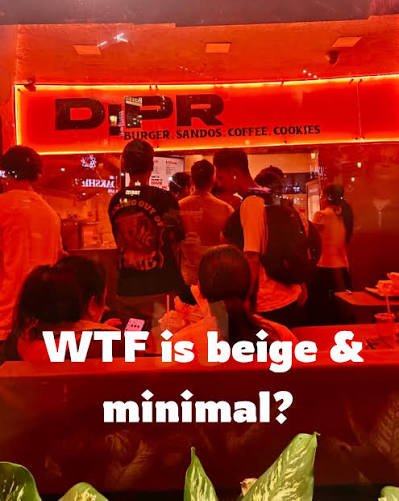
Today, the same 270 sq ft outlet is consistently busy, with queues regularly forming around the outlet and billing counter.
₹10,000+
Monthly revenue per sq ft
An exceptional level of revenue density for a 270 sq ft QSR in Noida.
Organic demand became the growth engine.
The outlet continues to generate demand through:
Product quality
Word of mouth
Organic social content
Customer referrals
Physical scarcity
rather than dependence on aggregator visibility or paid advertising.
The concept has become sufficiently distinctive that customers actively seek it out.
WHAT PROJECT X ACTUALLY CHANGED
CONCEPT
Translated the founders’ initial burger idea into a differentiated QSR proposition.
MENU
Created the menu direction, product architecture and recipes.
PRODUCT
Developed proprietary sauces, patties, buns, dips, crunches, sandos, cookies and beverage programmes.
KITCHEN
Re-engineered a 270 sq ft kitchen around actual staff movement and throughput.
EXPERIENCE
Turned the Burger + Dip + Crunch process into part of the customer experience.
COMMERCIAL STRATEGY
Created an offline-first model built around product quality, scarcity and referrals.
LAUNCH
Built a proposition capable of generating organic attention without relying on paid media.
THE OUTCOME
From repeated failure to repeat demand.
The same 270 sq ft space that had struggled through multiple previous concepts became a highly visible and consistently crowded QSR.
The business remains bootstrapped and is now exploring its second outlet.
More importantly, D!PR demonstrates that a small-format restaurant does not necessarily need:
A large footprint.
A huge menu.
Aggregator dependence.
Or a large advertising budget.
It needs a proposition people care about — and an operating system capable of delivering it.
PROJECT X TAKEAWAY
A small restaurant doesn’t need more space.
It needs better-designed decisions.
D!PR’s biggest constraint was its 270 sq ft footprint.
We didn’t try to fight that constraint.
We designed the product, kitchen, people movement, customer experience and commercial model around it.
When those systems work together, a tiny restaurant can create disproportionate demand.
PROJECT X’S ROLE
Project X Restaurants was engaged across:
- Concept development
- Menu strategy
- Recipe development
- Food trials
- Proprietary sauce development
- Product development
- Kitchen optimisation
- Assembly-line design
- Operations
- Coffee programme
- Beverage programme
- Customer experience
- Menu communication
- Commercial strategy
- Launch support
RELATED PROJECT X SERVICES
Restaurant Concept Development
Building commercially differentiated restaurant concepts.
Menu & Product Development
Creating menus designed around customer demand and operational reality.
Restaurant Operations Consulting
Designing systems, workflows and operating models that work in the real world.
QSR Consulting
Building scalable QSR propositions from concept through operations.
Restaurant Kitchen Design & Optimisation
Designing production systems around throughput, movement and space.
PROJECT X RESTAURANTS
Certainty. Credibility. Knowledge Arbitrage. Execution Capacity.
We help restaurant owners, investors and hospitality businesses build, restructure and scale commercially viable food businesses.