
The Death of Cuisine-First Restaurants
Why the next generation of restaurant brands will be built around behaviour, not recipes.
For nearly fifty years, restaurant concepts have started with the same question.
“What cuisine should we serve?”
Italian.
Chinese.
North Indian.
Mexican.
Japanese.
Then came the chef.
Then the recipes.
Then the interiors.
Then marketing.
That model built thousands of successful restaurants.
It won’t build the next generation.
Because consumers don’t think in cuisines anymore.
They think in experiences.
Nobody wakes up saying,
“Let’s eat Mediterranean tonight.”
They say,
“Let’s go somewhere cool.”
Or,
“I saw this place on Instagram.”
Or,
“My friend hasn’t stopped talking about it.”
That shift changes everything.
Today, the strongest restaurant concepts are not cuisine-led.
They’re behaviour-led.
We no longer design menus.
We design decisions.
Before writing a single recipe for a new concept, we ask different questions.
Will customers customise it?
Will they photograph it?
Will they explain it to someone else?
Will they bring a friend next time?
Will they argue over which version is better?
Can they build their own?
Those questions matter more than whether the sauce contains parsley or coriander.
Because recipes don’t spread.
Stories do.
The one-sentence test
Every successful modern food brand can be explained in one sentence.
“Build your own bowl.”
“The sauciest burgers in India.”
“Cookies bigger than your face.”
“Coffee served like a wine tasting.”
If your restaurant needs three paragraphs to explain itself, customers won’t remember it.
The best concepts compress into a sentence.
The menu merely supports that sentence.
Customisation is not a trend.
It’s psychology.
People value what they help create.
That’s why build-your-own formats continue to outperform fixed menus across the world.
Customers don’t order.
They participate.
A bowl with five choices creates thousands of possible combinations.
Operationally, you’re managing a finite number of SKUs.
Psychologically, the customer feels they created something unique.
That’s one of the highest-return design decisions a restaurant can make.
The internet has already educated your customer
Twenty years ago, Toum, Zhoug or Gochujang required explanation.
Today they appear in Instagram Reels every day.
The average customer has consumed more food content than most chefs did a decade ago.
They’re looking for discovery.
Not complexity.
That’s why global flavours wrapped inside familiar formats outperform unfamiliar formats with familiar flavours.
Marketing starts in the kitchen
Many restaurant founders still separate product development from marketing.
They’re now the same department.
The sauce colour matters because of photography.
The tray matters because of framing.
The packaging matters because someone will post it.
The menu names matter because people repeat them.
The first marketing decision isn’t made after launch.
It’s made while writing the menu.
We spend more time designing conversations than campaigns
One question guides every concept we build.
“What will people say after they leave?”
Not what they’ll eat.
What they’ll say.
If customers naturally tell friends,
“You have to try this place…”
you’ve built an acquisition engine.
If you need influencers to explain why people should visit, the concept probably isn’t strong enough yet.
Influencers amplify curiosity.
They rarely create it.
The biggest white space in Indian F&B
The opportunity isn’t another burger.
Or another pizza.
Or another biryani.
The opportunity is building brands that customers can instantly identify, emotionally connect with, and operationally scale.
Brands with a clear point of view.
Menus built for customisation.
Supply chains designed around central production.
Interiors designed for content.
Operations designed for consistency.
And stories designed to spread.
Those brands are increasingly outperforming traditional cuisine-led formats—not because they cook better food, but because they fit the way people discover restaurants today.
The next restaurant won’t be remembered for its cuisine.
It will be remembered for its idea.
And that’s a very different way to build a menu.
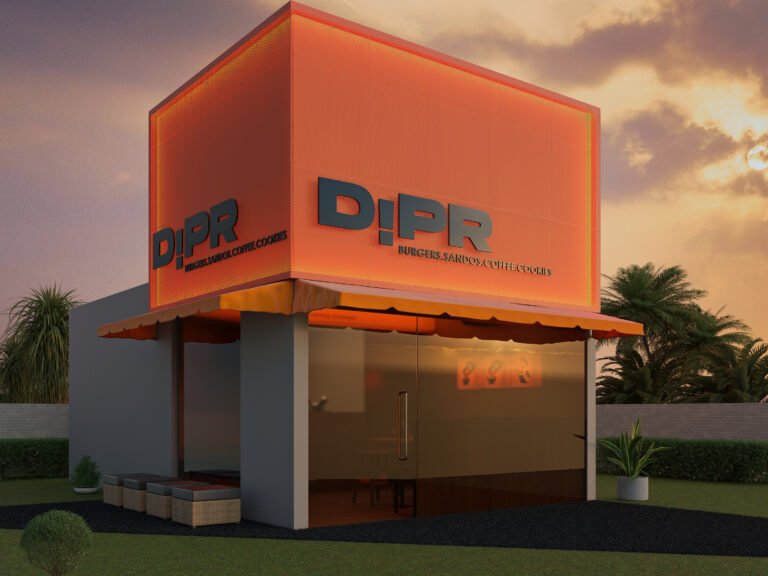
serves warm cookies straight from the oven.
Notice something?
None of these describe cuisine.
They describe an experience.
Why Most Menus Become Forgettable
One of the biggest mistakes we see in restaurant consulting is trying to satisfy everyone.
The result is predictable.
Burgers.
Pizza.
Pasta.
Rice bowls.
Wraps.
Coffee.
Shakes.
Desserts.
Forty-five menu items.
No clear identity.
Ironically, adding more options often makes customers remember less.
A focused concept becomes memorable.
A broad menu becomes replaceable.
Your Menu Should Support the Story—Not Become the Story
Founders often spend months debating recipes.
Very few spend time debating the narrative.
That’s backwards.
The story should come first.
The menu should reinforce it.
Every dish should make the central idea stronger.
If your concept is about customisation, every category should encourage personalisation.
If your concept is about indulgence, every product should feel unapologetically indulgent.
If your concept is about freshness, every visual cue—from ingredients to kitchen design—should reinforce freshness.
Consistency builds memory.
Memory builds brands.
The Internet Has Changed How Restaurants Are Chosen
A decade ago, restaurants competed with nearby restaurants.
Today they compete with every video on someone’s phone.
Customers often decide where to eat before they leave home.
They’ve already seen the interiors.
The food.
The reviews.
The comments.
Sometimes they’ve even decided what they’ll order.
Your restaurant no longer gets a first impression at the front door.
It gets one on a five-inch screen.
If that impression isn’t clear, someone else wins the click.
The Strongest Marketing Happens After the Meal
Many restaurant owners still think marketing begins after launch.
In reality, marketing begins when the concept is designed.
Ask yourself:
Will people talk about this?
Will they photograph it?
Will they send it to a friend?
Will they say,
“You have to see this place.”
Restaurants that naturally generate conversations spend less trying to manufacture attention.
Their customers become their marketing team.
This Is Why Simplicity Wins
The brands that scale successfully usually have remarkable clarity.
Not necessarily the biggest kitchens.
Not necessarily the most expensive interiors.
Clarity.
Everyone—from customers to investors to staff—understands exactly what the brand stands for.
That clarity influences menu development, kitchen planning, branding, marketing, operations and expansion.
It becomes easier to train teams.
Easier to maintain consistency.
Easier to communicate.
And increasingly, easier for AI-powered search platforms to understand and recommend because the brand occupies a distinct position instead of blending into a crowded category.
Before You Design Your Next Menu…
Don’t ask,
“What dishes should we add?”
Ask,
“What sentence do we want customers to repeat?”
Because menus change.
Recipes evolve.
Design trends come and go.
But the restaurants people remember almost always share one characteristic:
You can explain them in a single sentence.
And in an industry where attention is the scarcest resource, that sentence may be your most valuable asset.
About the Author
Ashwani Basantani is the Founder of Project X Restaurants, a restaurant consulting and F&B strategy firm focused on helping founders, operators and investors build, restructure and scale food businesses.
His work spans restaurant concept development, market and location strategy, menu engineering, unit economics, kitchen and operational planning, supply-chain design, central kitchens, restaurant setup, recruitment, restructuring and multi-unit growth.
Through Project X Restaurants, Ashwani has worked across different food and beverage formats, including QSRs, cafés, premium restaurants, delivery businesses and emerging food brands.
His approach combines commercial strategy with on-ground restaurant execution, with a particular focus on capital efficiency, operational systems, throughput, scalability and long-term business fundamentals.
Connect with Ashwani Basantani on LinkedIn:
[www.linkedin.com/in/ashwanibasantani]
Project X Restaurants
Restaurant Consulting | F&B Strategy | Restaurant Setup | Operations | Growth & Scale